About me
Welcome to my homepage!
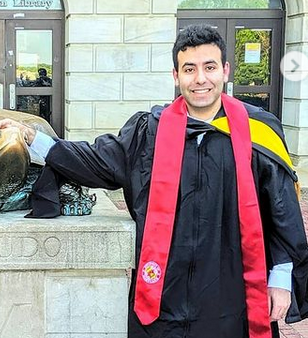
I’m Paul, a robotics and AI researcher from Halat, Lebanon. My research spans LLM post-training optimization, inverse reinforcement learning, physics-informed neural networks, and control theory, with hands-on experience deploying on robotic arms, drones, mobile platforms, and underwater swarms. I have published more than a dozen papers at top-tier AI and controls venues including AAAI, TMLR, IEEE TAC, IROS, ACC, and CDC. My work has been featured in National Geographic.
The best way to reach me for career-related stuff is by shooting me an email at ghanem.p@northeastern.edu. I am genuinely interested in forming meaningful connections with fellow AI scientists, engineers, students, etc, so feel free to reach out even if we never met in person.
Aside from AI, I love playing soccer, skiing, and weight lifting!
Research Statement
My research lies at the intersection of imitation learning (IL), online learning, latent variable modeling, and LLM reasoning with the goal of building intelligent systems that learn from demonstrations and adapt in real time to uncertain, dynamic environments. I develop algorithms that move beyond behavior cloning to infer the latent structure, goals, and dynamics underlying expert behavior, enabling robust generalization under partial observability and distribution shift.
In parallel, I develop methods for learning compact and expressive latent representations from high-dimensional, noisy, and partially observed time series, where the true system state is not directly measurable. These latent variables act as internal models of the hidden dynamics, enabling structured planning, long-horizon prediction, and feedback control in environments with incomplete or indirect observations. More recently, I have been extending these ideas to Large Language Models, developing bayesian optimization frameworks to optimize latent representations in LLM at test-time to improve reasoning accuracy without retraining.
To support this, I integrate tools from control theory and Bayesian state estimation with modern machine learning, incorporating concepts such as recursive filtering, dynamical systems modeling, and optimal control. These frameworks introduce structure, inductive bias, and principled uncertainty quantification, improving both data efficiency and decision-making in complex, time-evolving systems. These frameworks have been validated on physical robotic platforms including the Barrett WAM 7-DOF manipulator, the Aerobat flapping-wing robot, a swarm of underwater fish robots and the Hello Robot Stretch mobile platform.
Ultimately, my goal is to build adaptive, interpretable, and scalable learning systems that operate under uncertainty, learn from limited supervision, and align with human intent with applications in robotics, LLM reasoning, behavioral modeling, and intelligent assistive technologies.
Media
In the Press:
- National Geographic — “Bats Have Disease-Defying Superpowers. What If We Could Copy Them?” (2024)
- National Geographic — “‘Snakes’ on the Moon? These Helpers Could Soon Join Our Lunar Mission” (2022)
Trajectory
From 2026 until now, I am a PostDoctoral researcher at the University of Massachusetts Boston, working on LLM optimization with Prof. Tales Imbiriba
From 2020-2025 I was a PhD student at Northeastern University in the Machine Learning Group with Prof. Deniz Erdogmus and in the robotics group, headed by Prof. Alireza Ramezani. At the same time, I had the pleasure of working as a machine learning research intern at Bose Corporation.
From 2019-2020 I was a Controls Software Engineer at Airgility
From 2017-2019 I was a Masters student at University of Maryland in the Collective Dynamics and Controls Lab with Prof. Derek Paley.
From 2016-2017 I was a Lab Instructor and researcher Assistant in Controls and Robotics at the Lebanese American University advised (then and now) by Prof. Samer Saab.
Education
B.E - Electrical Engineering - Lebanese American University, Byblos,Lebanon (16)
M.S - Systems Engineering - University of Maryland, College Park (19)
PhD - Electrical and Computer Engineering - Northeastern University, Boston (25)